
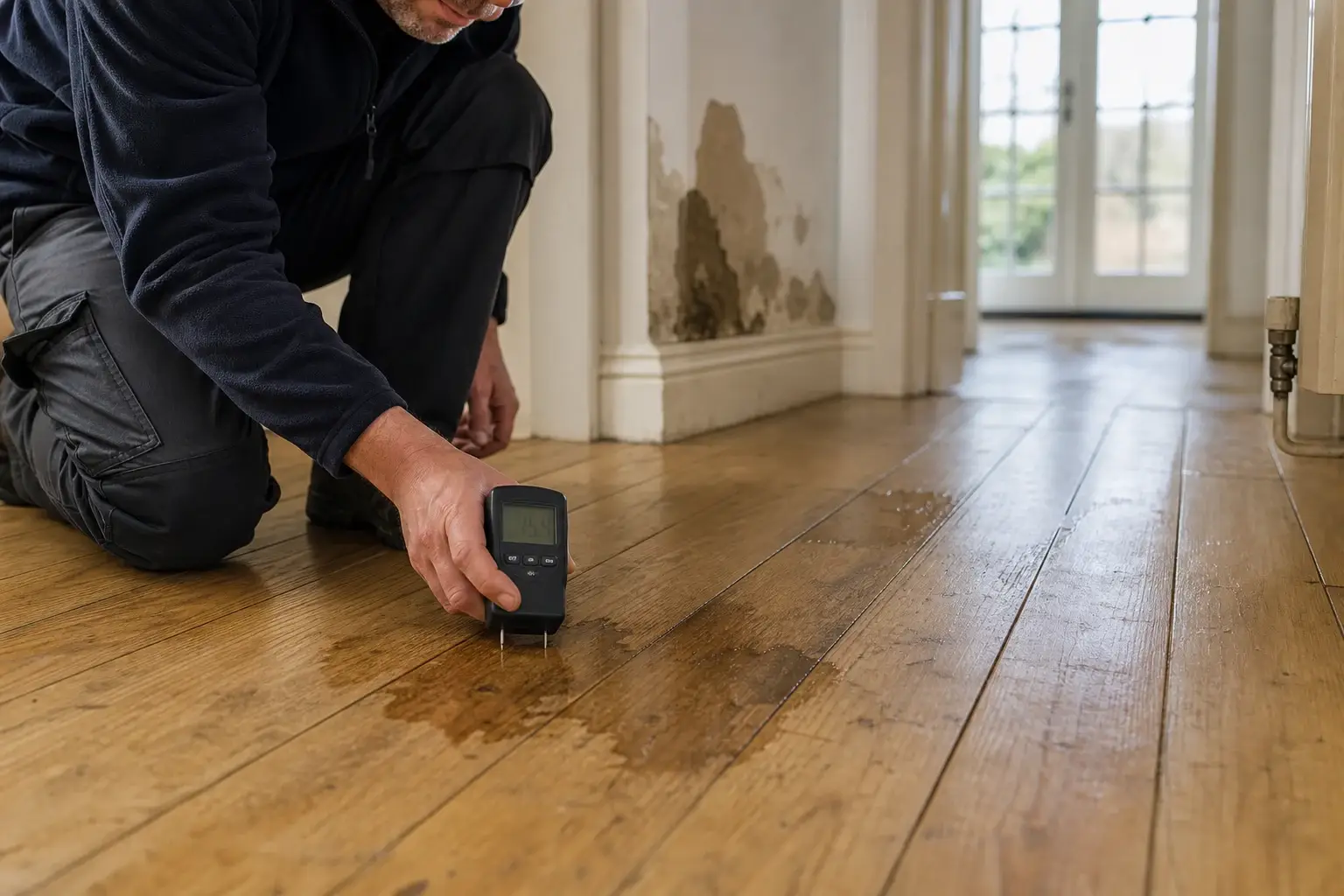
Moisture-related flooring problems often start quietly. A slight change in appearance, a soft spot underfoot or a new smell in the room can be the first sign that something beneath the surface needs attention.
The difficulty is that moisture does not always show itself in the same way. It can affect timber, carpet, adhesives, screeds and subfloors in different ways, and similar symptoms can have more than one cause. That is why the safest approach is to look for patterns, note what has changed, and avoid jumping to conclusions before the floor has been properly assessed.
Checklist: early signs to watch for
- Visible movement in the floor surface – boards, planks or floor coverings that seem to lift, shift or feel unstable may be reacting to moisture, but movement can also be linked to installation issues or subfloor problems.
- Edge lift or curling – raised edges in timber, laminate or resilient flooring can indicate moisture movement, adhesive failure or an unsuitable substrate. An inspection can help narrow down the likely cause.
- Cupping, crowning or distortion in timber – if wood flooring starts to curve, arch or change shape, moisture imbalance is one possible explanation, particularly if the problem has appeared after installation or during a period of changing conditions.
- Gaps that appear or widen – seasonal gaps can occur in some timber floors, but persistent or uneven gaps may suggest moisture fluctuation or movement in the floor structure. Why solid wood floors can gap in autumn and winter
- Rippling, bubbling or lifting in carpets or sheet flooring – this may point to moisture affecting the backing, adhesive or subfloor, although poor installation or stretching issues can look similar. Why carpets ripple or wrinkle after installation, and what it may indicate
- Hollow patches or a loose feel underfoot – a hollow sound does not prove moisture by itself, but it can indicate a loss of bond, voids beneath the flooring or movement in the substrate. Why flooring can sound hollow or feel loose after installation
- Staining, darkening or discolouration – changes in colour can indicate moisture migration, condensation or contamination, especially if the marks are spreading or recurring.
- Musty or damp odours – smell alone is not proof, but it can be a useful warning sign when combined with staining, movement or visible defects.
- Changes after cold weather – some moisture-related issues become more noticeable in colder conditions, when condensation risks can increase. Why condensation can affect flooring performance in colder weather
What these signs may mean
These symptoms do not automatically point to a single fault. Moisture-related flooring problems can come from several different sources, including a damp subfloor, trapped construction moisture, poor ventilation, leaks, condensation, incompatible materials or an installation that has not allowed for normal movement.
In some cases, the floor surface is only showing the problem that exists below it. For example, moisture in a screed or timber substrate may not be obvious until the finished floor begins to lift, gap, stain or distort. In other cases, the flooring may be reacting to the environment around it rather than a defect in the product itself.
That is why it is usually not enough to ask whether the floor is “damaged”. The more useful question is what is allowing the problem to develop, and whether that issue is still active.
Checklist: details worth noting before you raise the issue
- When the problem first appeared
- Whether it is getting worse, stable or intermittent
- Which rooms or areas are affected
- Any recent changes to heating, ventilation or water use
- Whether the floor was newly installed or has been in place for some time
- Any past leaks, spills, condensation, plumbing work or building work nearby
- Whether the issue is limited to one section or spread across the room
Good records can be helpful if the matter later needs to be reviewed as a complaint, dispute or insurance-related issue. If you are gathering evidence, this guide may help: What evidence to gather before asking for an independent flooring inspection.
When an independent inspection may be appropriate
If the cause is not obvious, or if the floor is continuing to deteriorate, an impartial inspection can help establish what is happening and whether moisture is part of the picture. That may include on-site assessment, moisture-related investigation, inspection of the subfloor, review of installation details and, where appropriate, a formal written report.
This is especially sensible where the problem is disputed, where more than one possible cause exists, or where the floor may have been fitted over a substrate that was not ready for installation. Why moisture problems can show up after a new floor is installed
If you are unsure whether the issue needs a complaint first or an independent inspection, this guide may help you decide: How to tell whether a flooring problem needs an independent inspection or just a complaint.
The Flooring Inspector provides independent flooring inspections across England, Scotland and Wales, with reports based on evidence rather than assumption. If you are dealing with an unresolved moisture-related flooring problem, a member of the team can discuss the issue before a quotation for inspection is prepared.