
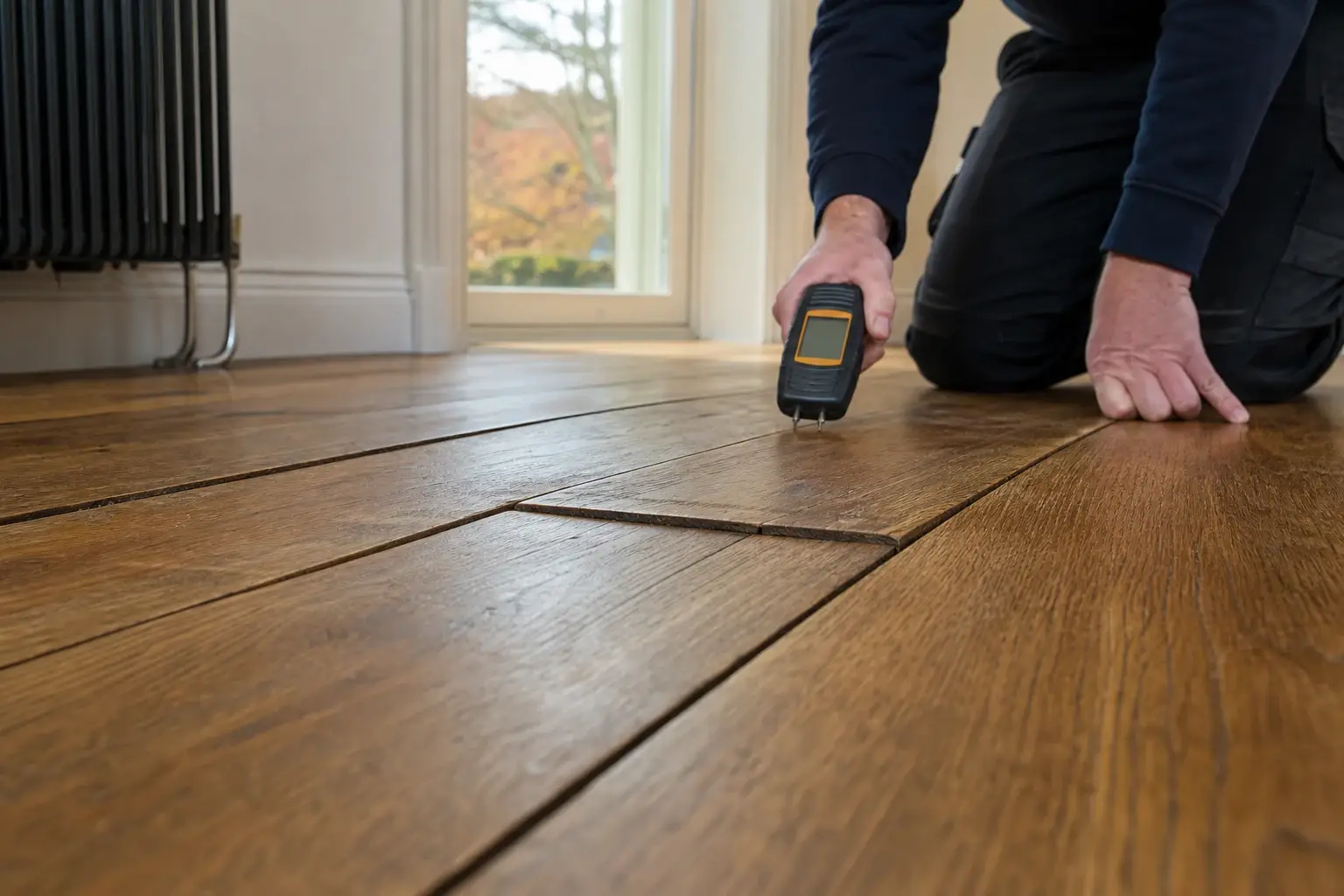
Visible gaps between solid wood boards often become more noticeable in autumn and winter. In many cases, that is a result of timber responding to a drier indoor environment rather than an immediate sign that the floor has failed.
Wood is hygroscopic, which means it absorbs and releases moisture from the surrounding air. When the air inside a property becomes colder and drier, solid wood can shrink slightly across the width of the boards. That shrinkage can open up small gaps between boards, especially where the floor has already been installed at its natural limit of movement.
The important question is not simply whether gaps are present, but whether the amount and pattern of movement looks consistent with seasonal change or whether it suggests a wider problem that should be inspected.
Why gaps often appear in colder months
During autumn and winter, heating systems are used more often and indoor humidity can drop. Solid timber responds to that change by losing some moisture and contracting. This movement is normal to a degree, particularly in a properly installed floor that has been allowed space to expand and contract.
Because solid wood is made from a single piece of timber, it tends to move more than engineered flooring. That does not mean every gap is acceptable, but it does mean some seasonal opening and closing is expected over the course of the year.
In many homes, the gaps narrow again in spring or summer as indoor humidity rises. If the floor appears different from one season to the next, that pattern can be a clue that the movement is moisture-related rather than a structural defect.
What may be considered normal movement?
Minor seasonal gaps between boards can be part of how solid wood behaves. In a well-installed floor, the movement is usually modest, relatively even across the room, and not accompanied by other signs of distress.
Examples of movement that may be less concerning include:
- small, fairly even gaps that appear during colder weather
- gaps that reduce again in warmer, more humid months
- no obvious lifting, cupping, cracking or loose boards
- a floor that otherwise feels stable underfoot
That said, “normal” can vary depending on the species of timber, the room conditions, the building, the subfloor and how the floor was installed. An inspection can help determine whether the visible movement looks proportionate to the conditions in the property.
When gaps may suggest a problem
Gaps alone do not automatically mean the installer did something wrong. However, wider, uneven or persistent gaps can indicate that something else is affecting the floor.
Possible causes can include:
- excessively dry indoor conditions
- insufficient acclimatisation before installation
- incorrect fixing or installation methods
- inadequate expansion allowance at the perimeter
- moisture issues in the subfloor or within the building fabric
- ongoing movement in the floor structure below
Other symptoms can make the picture clearer. For example, if gaps are appearing alongside movement or squeaking in timber floorboards, edge lifting or localised lifting, the issue may need a closer look. Likewise, if the floor has also started to sound hollow or feel loose, that may point to a different or additional problem.
For related reading, see why flooring can sound hollow or feel loose after installation and why timber floors can lift at the edges.
Signs that merit an independent inspection
A seasonal gap is often part of natural timber behaviour, but an independent flooring inspection may be useful if the gaps are:
- large, getting wider, or appearing suddenly
- uneven rather than spread consistently across the floor
- present alongside cupping, crowning, lifting or cracking
- accompanied by ongoing draughts, dampness or visible subfloor issues
- affecting only certain areas of the room
- part of a disputed installation where the cause is unclear
In those situations, the aim is not to guess the cause but to gather evidence. A proper inspection can assess moisture conditions, board movement, the subfloor, installation details and any other factors that may be contributing to the problem.
If you are trying to decide whether your issue needs a formal inspection or a simple complaint first, this guide may help: how to tell whether a flooring problem needs an independent inspection or just a complaint.
What an inspection may look at
When solid wood floor gaps in autumn and winter are being investigated, an inspector will typically look at the visible floor condition, the installation details, the subfloor and the indoor environment where relevant. Moisture-related questions are often central, because timber movement is strongly influenced by changes in humidity and moisture content.
An inspection can help distinguish between seasonal shrinkage that is likely to recur and a pattern that suggests installation error, substrate movement or a building-related moisture issue. That distinction matters if the floor is the subject of a dispute, because the visible gap itself is usually only one part of the picture.
If you are dealing with an unresolved timber flooring problem and want an impartial view, The Flooring Inspector provides independent inspections and written reports across England, Scotland and Wales. A member of the team can discuss the issue first before any quotation for inspection is prepared.
You can request a call back through the contact page.