
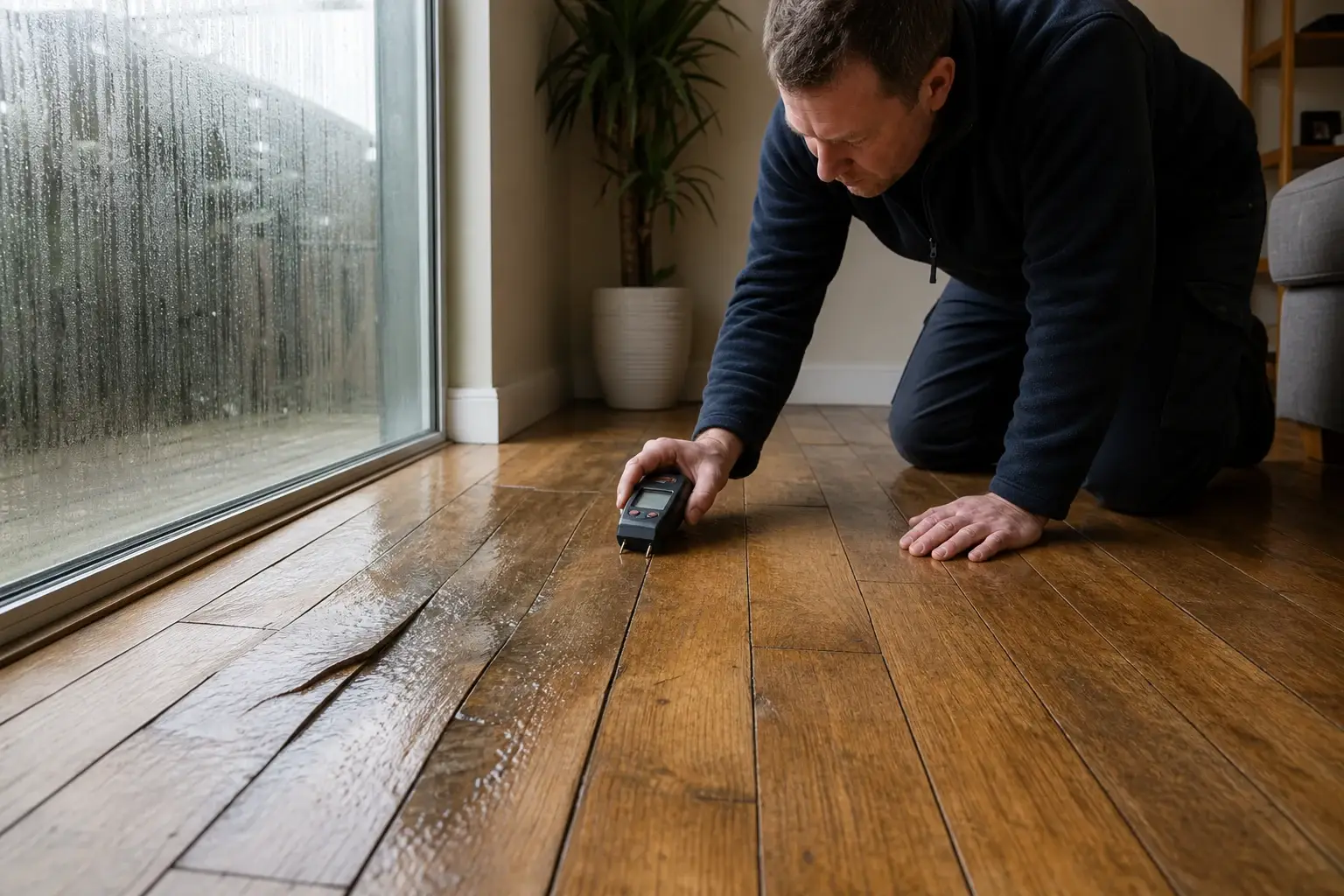
Colder weather can expose moisture-related flooring problems that were not obvious during milder months. If a floor starts to show staining, movement, lifting, cupping, rippling or a general change in condition when temperatures drop, condensation may be part of the picture. It is not always the only explanation, though, and appearances alone rarely tell the full story.
In simple terms, condensation forms when warm, moisture-laden air meets a colder surface and the vapour turns back into liquid. In a building, that can happen on or near colder floors, subfloors, walls, pipes or structural elements. Once moisture is present, it can affect the way a flooring system performs, especially where the floor, subfloor and room conditions are not in balance.
How colder weather can create flooring problems
As temperatures fall, the difference between indoor air and colder materials beneath the floor can increase. That can make surface condensation, trapped moisture or localised dampness more likely in some situations. The risk is often higher where ventilation is poor, heating is intermittent, or the building envelope allows cold bridging or excess moisture movement.
Flooring performance depends on more than the visible finish. The condition of the subfloor, the moisture content of timber, the relative humidity in the room and the suitability of the installation all matter. If any of those factors are out of balance, colder weather can make a hidden issue show itself.
That is why a floor that seemed stable in autumn may behave differently in winter. The seasonal change does not necessarily mean the flooring itself is defective, but it can reveal an underlying moisture problem that deserves proper investigation.
Visible signs that condensation could be involved
Some symptoms can point towards a moisture-related issue, although none of them proves condensation on its own:
- Cupping in wood floors – where the edges of boards rise higher than the centre.
- Crowning – where the centre of a board sits higher than the edges, often after moisture has been present and the floor later dries unevenly.
- Gapping – seasonal movement may be normal in some timber floors, but wider or sudden gaps can indicate moisture movement or installation issues.
- Lifting or peaking – boards or planks may move upwards if the flooring is under stress.
- Rippling or wrinkling in carpet – this can be caused by moisture, poor installation, backing movement or subfloor conditions.
- Dark staining, odour or discolouration – these may suggest dampness, but the source still needs to be identified.
- Cold, patchy or changing underfoot feel – sometimes noticeable where moisture or thermal differences are affecting the floor build-up.
In some properties, the issue may be more subtle. A floor might sound different underfoot, feel slightly uneven or begin to show minor movement around edges and joints. Those are useful observations, but they are not enough to confirm the cause.
Why a visual check is usually not enough
Condensation is often mistaken for other moisture sources. A similar-looking floor problem could be linked to a damp subfloor, a failed moisture barrier, inadequate acclimatisation, poor subfloor preparation, heating-related movement or installation defects. In other words, a visible symptom does not automatically point to a single cause.
This is especially important with wood and timber flooring. Timber responds to changes in moisture and temperature, so a floor that cups or gaps during colder weather may be reacting to environmental conditions, but it may also be reacting to moisture coming from below. The distinction matters, because the remedy will be different.
For that reason, a proper inspection usually needs more than a quick look. It may include moisture testing, checking room conditions, assessing the subfloor, examining the flooring layout and fixing details, and considering whether the problem is localised or part of a wider building issue. Our article on moisture readings before installing new flooring explains why these measurements matter before a floor is laid, but the same principles often apply when a floor later develops problems.
What to do if your floor changes in colder weather
If you notice a new problem during winter or cold snaps, avoid jumping straight to a conclusion. It is more helpful to note when the symptoms started, which rooms are affected, whether heating or ventilation patterns have changed, and whether the issue improves or worsens over time.
If the problem remains unresolved, impartial investigation can help establish the underlying cause. That may be particularly useful where there is a dispute between a homeowner, contractor, retailer, manufacturer or insurer. The Flooring Inspector provides independent, evidence-based inspections across England, Scotland and Wales, including moisture-related investigations, subfloor assessments and formal written reports. You can read more about our services or learn about our subfloor inspection and wood floor inspection services.
If you are dealing with an unresolved flooring problem, request a call back and a member of the team can discuss the issue before a quotation for inspection is prepared.