
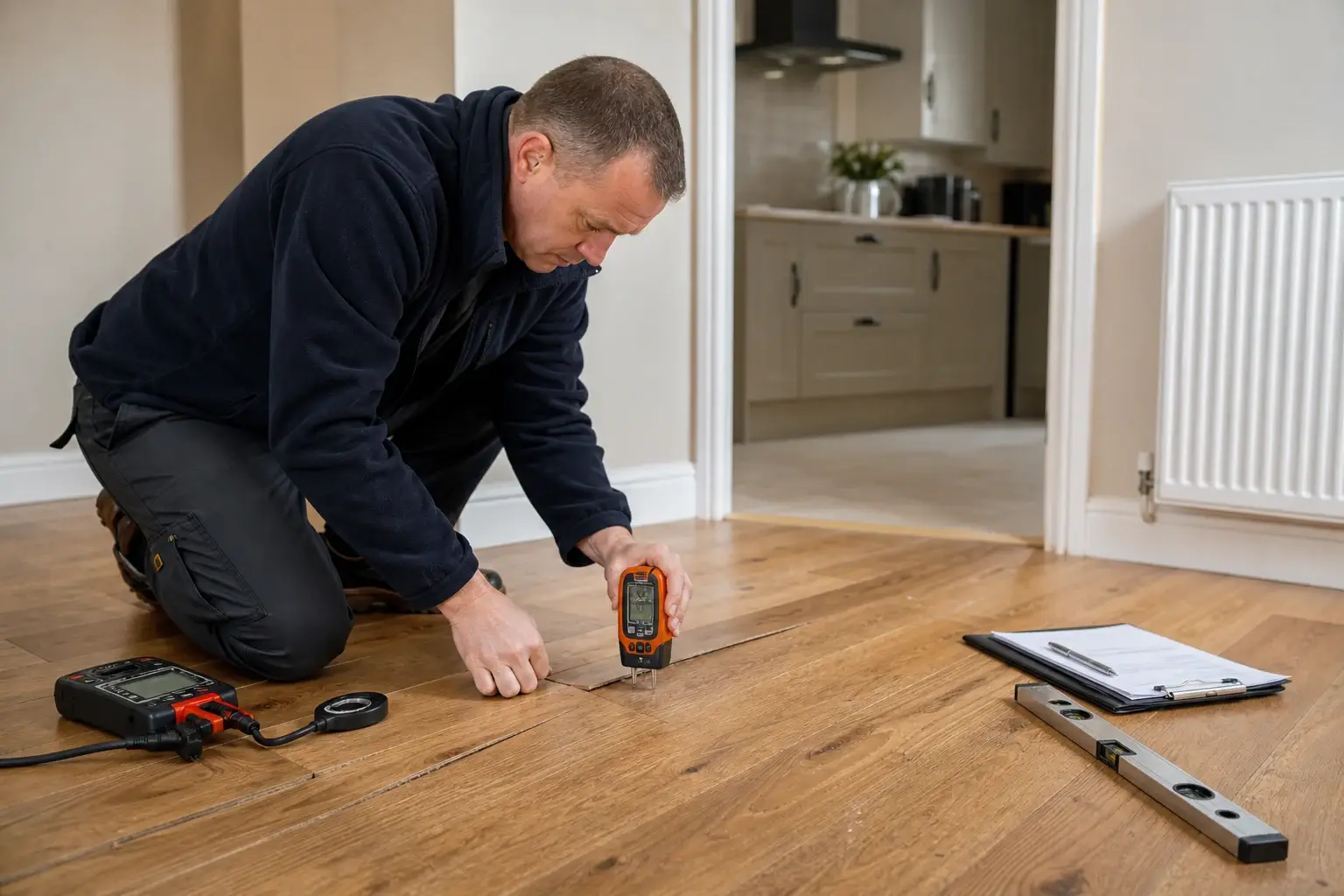
A straightforward complaint is often enough when the issue is simple, visible and clearly within someone’s control. But when a floor is lifting, rippling, squeaking, staining or failing in a way that could have several possible causes, an independent flooring inspection is usually the safer first step.
The key question is not just “Is something wrong?” It is “Can the cause be identified without technical investigation?” If the answer is no, a complaint alone may not get you very far because each side may be relying on assumptions rather than evidence.
When a complaint may be enough
Some flooring problems are relatively direct. A complaint may be the right starting point if the issue is obviously linked to workmanship or service, and the facts are already clear. For example:
- a visible fitting issue that was noticed immediately after installation
- an item delivered in the wrong colour, style or specification
- damage that clearly occurred during delivery or fitting
- a missed area, such as incomplete installation or poor finishing that is easy to see
In situations like these, you may be able to raise the issue with the retailer, contractor or supplier and ask for a remedy without needing a technical report first. Photos, invoices and written notes can still help, but the problem itself may be obvious enough to describe clearly.
When an independent inspection is more appropriate
Many flooring disputes are not that simple. Flooring can fail for reasons that are not obvious to the eye, and the same symptom can point to very different causes. A floor that is lifting, for example, might be affected by moisture, insufficient expansion allowance, adhesive failure, substrate movement or poor environmental conditions. In those situations, an independent flooring inspection can help determine what is actually happening.
This is especially useful when:
- the cause of the problem is disputed
- more than one party may be involved, such as a contractor, retailer, builder or manufacturer
- the flooring has changed over time rather than failing immediately
- there may be an underlying subfloor or moisture issue
- the dispute is escalating and written evidence is needed
- the installer says the issue is not their responsibility, but the reason is unclear
Problems involving wood and timber flooring, carpets, subfloors and moisture-related issues are often best assessed before anyone reaches a firm conclusion. That is because the visible symptom is not always the root cause.
Signs the issue needs technical investigation
Some warning signs suggest you are beyond a simple complaint and into inspection territory:
- the floor is moving, lifting, cupping, crowning or gapping
- there are recurring squeaks, hollows or soft spots
- carpet is rippling, wrinkling or showing seam issues
- the problem appeared after recent building work, flooding or heating changes
- there are signs of moisture, staining or odour
- the floor was installed over a screed or timber subfloor and no one is sure whether preparation was suitable
- the same issue has returned after an attempted repair
These are the kinds of cases where early evidence matters. Once repairs begin, finishes are lifted, or positions become entrenched, it can become harder to establish what the floor looked like initially and what conditions were present at the time.
What an inspection can help establish
An impartial inspection does not start with blame. It starts with observation, testing where appropriate and consideration of likely causes. Depending on the flooring type and the problem, an inspection can help establish:
- whether the visible defect is localised or more widespread
- whether moisture may be contributing to the issue
- if the subfloor appears suitable for the floor covering installed
- whether movement, flatness or preparation may have been a factor
- if the symptoms are consistent with installation error, product behaviour, environmental conditions or substrate issues
- what further steps, if any, may be reasonable
For timber floors, you may find this guide useful: Why timber floors can lift at the edges, and what it may indicate. If the problem is linked to moisture or cold-weather conditions, this article may also help: Why condensation can affect flooring performance in colder weather.
Why early evidence matters
Flooring disputes often become more difficult when there has been a delay. By then, conditions may have changed, temporary fixes may have been attempted and key details may no longer be visible. That is why it is often wise to preserve evidence early: take dated photographs, keep copies of messages, note when the issue started and avoid unnecessary disturbance if possible.
If the flooring has not yet been altered, an inspection may have a better chance of identifying the underlying cause. If repairs have already begun, an inspector can still assess the available evidence, but some original clues may be lost.
Choosing the right next step
If the issue is simple, obvious and easy to describe, start with a complaint. If the problem is technical, recurring, disputed or potentially caused by moisture, substrate conditions or installation factors, an independent flooring inspection is usually the more useful first step.
That is especially true where you need a clear, impartial report rather than an exchange of opinions. The Flooring Inspector provides independent inspections, technical assessments and formal written reports across England, Scotland and Wales, including dispute-related work where evidence is needed before positions harden. If you are unsure which route is appropriate, you can request a call back and discuss the issue before any quotation for inspection is prepared.