
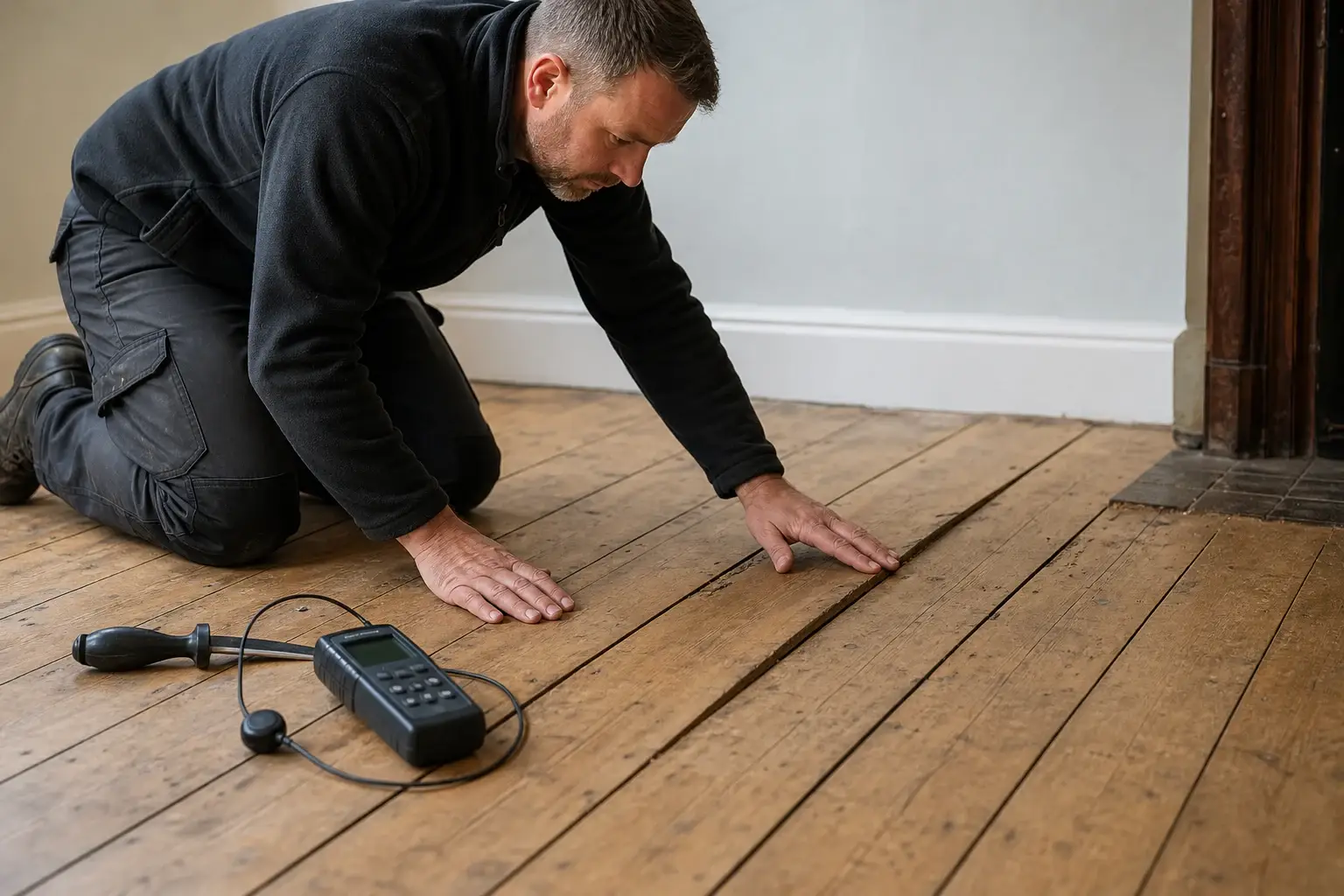
A timber floor that feels loose, bouncy or springy does not automatically mean it has failed. In many cases, the sensation is a symptom rather than a diagnosis. The movement may come from loose fixings, a problem with the subfloor, natural deflection in the structure, or an installation issue that has developed over time.
The key point is that similar symptoms can arise from very different causes. A floor that feels unsettled in one area may need nothing more than local repair, while in another case the movement may reflect a wider substrate or structural issue. That is why an inspection is usually the sensible next step if the problem is new, worsening, or affecting more than one board area.
What the movement may feel like
People often describe the problem in slightly different ways. The floor may:
- bounce or dip underfoot
- feel loose at the edges of boards
- move with a creaking or rubbing sound
- feel soft, springy or slightly unstable in one spot
- seem to flex more than the rest of the room
These sensations can happen on older timber floors as well as newer installations. What matters is whether the movement is localised, consistent, getting worse, or accompanied by signs such as gaps, squeaks, cracking, lifted boards or visible movement in the floor finish.
Possible causes to consider
There is no single explanation for a timber floor that feels loose or springy. Common contributing factors can include the following.
Loose or insufficient fixings
If boards have not been fixed securely enough, or if fixings have loosened over time, the boards may move when walked on. This can create a hollow or unsettled feel, often with noise as the board shifts against the joists or substructure below.
Movement in the subfloor or joists
The floorboards themselves may not be the only part moving. Deflection in the supporting structure, poor support below, or deterioration in the subfloor can all produce a similar springy feel. In some properties, the issue may be more noticeable in certain rooms, near doorways, or along a particular line of boards.
Expansion, shrinkage or seasonal movement
Timber responds to changes in temperature and humidity. Some movement is normal, especially in older floors, but excessive shrinkage or movement can expose fixings, open gaps or make boards feel less secure. If you are also seeing seasonal gapping, that can be relevant context, although it does not on its own explain the full issue.
Installation defects or poor preparation
Where a floor has been recently installed, the cause may relate to how it was fitted. That could include inappropriate fixing methods, inadequate preparation, or a substrate that was not suitable for the finished floor. Small deviations in installation tolerances can sometimes create a noticeable feel underfoot. Related issues are also discussed in installation tolerances that can make or break a floor finish.
Moisture-related change
Moisture can affect timber dimensions and the performance of supporting materials. A floor that has been exposed to a moisture problem may start to move, cup, lift or change character underfoot. If the problem appeared after a leak, spill, condensation event or building work, moisture should be considered as part of the investigation. In some cases, post-installation testing is important because the issue may already be established by the time symptoms become obvious. See also moisture testing after installation.
Checks that can help narrow down the cause
Before anyone assumes the floor has failed, it helps to note exactly what is happening and where. Useful checks include:
- identifying whether the movement is in one isolated area or across the room
- checking whether the problem is worse at certain times of year
- looking for squeaks, gaps, lifted edges or visible board movement
- noting any recent leaks, maintenance work or changes to heating and ventilation
- recording whether the floor is original, renovated or recently installed
If the room is above a void, over a suspended timber floor, or part of a larger property movement pattern, that context can also matter. A loose feel does not necessarily point to one single fault, so the pattern of movement is often more useful than the sensation alone.
When an inspection is worth arranging
An independent inspection is usually sensible if the floor movement is getting worse, if several boards are affected, if there are visible signs of damage, or if the problem has become part of a dispute. It is also worth considering if the floor is newly installed and already feels unstable, because early movement can indicate that something in the build-up was not right.
An inspection can help separate what is visible from what is causing it. That may include checking the floor covering, fixings, supporting structure, substrate condition and any evidence of moisture or movement. Where relevant, the findings can be set out in a formal written report.
If you are dealing with an unresolved issue and need an impartial view, you can request a call back from The Flooring Inspector. The team can discuss the problem first and then advise on the most appropriate next step before a quotation for inspection is prepared.