
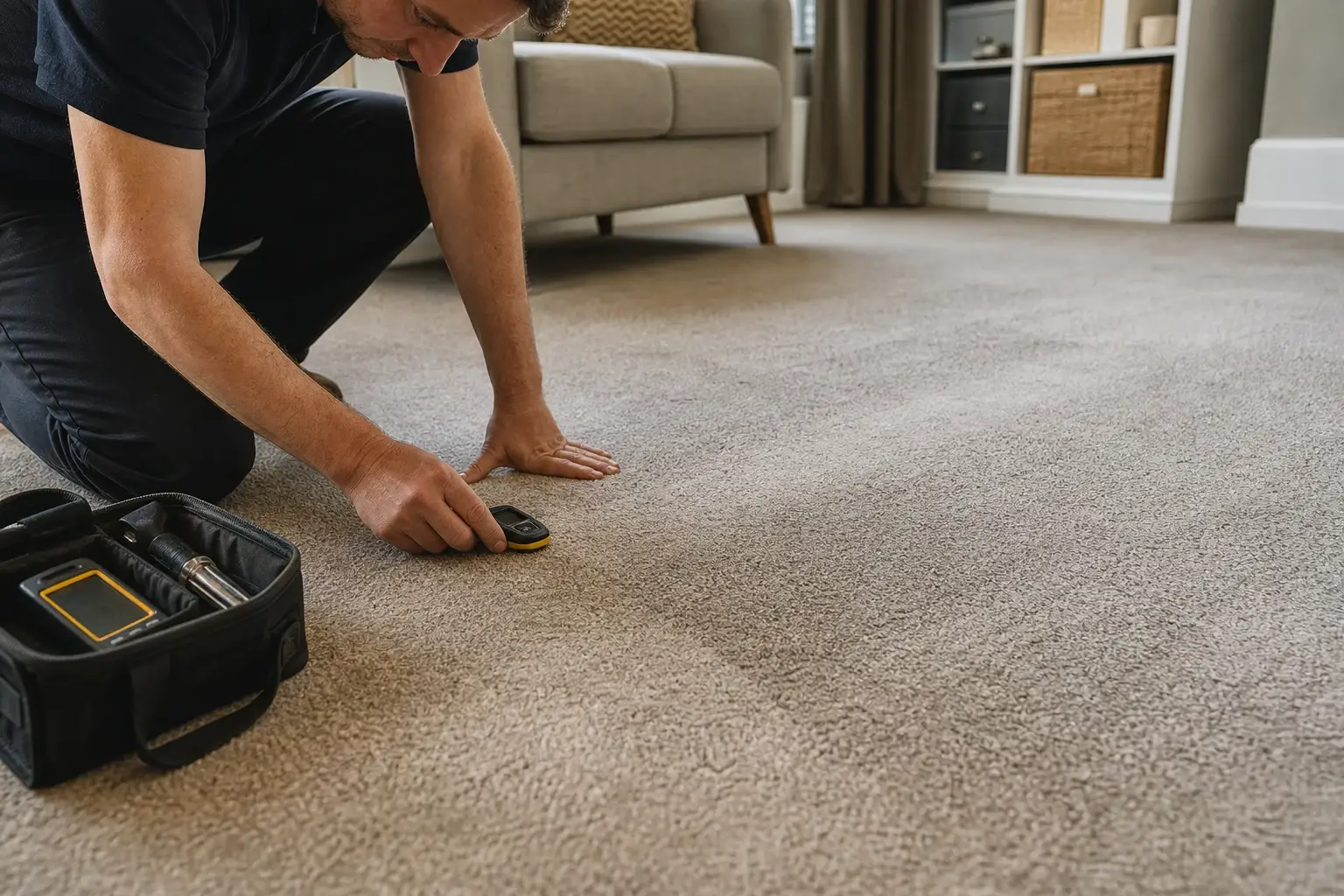
Carpet pile often flattens in the places that get the most use: hallways, doorways, the bottom step, in front of sofas or beside a bed. In many homes, that is a normal appearance change rather than a defect. But if the carpet looks crushed very early, seems uneven in patches, or recovers poorly after cleaning or vacuuming, there may be more going on than everyday wear.
The key point is that flattened pile does not automatically mean the carpet has failed. An independent inspection can help separate normal traffic wear from product, installation or underlay issues, especially where the appearance change is more noticeable than expected or is happening in a pattern that does not make sense.
Common reasons carpet pile flattens
The most straightforward explanation is repeated foot traffic. Carpet fibres bend and lie in one direction over time, particularly in routes people use every day. That effect is often more visible in lighter-coloured carpets, cut pile carpets and areas where people turn or pause repeatedly.
Furniture pressure can also flatten the pile. Heavy items such as sofas, tables and beds compress fibres for long periods. In many cases, the pile will spring back to some extent when the furniture is moved, but some marking or compression can remain.
Vacuuming habits matter too. Regular vacuuming helps remove grit that can wear fibres down, but aggressive beater bars or overly frequent vacuuming in one direction can contribute to a carpet looking more brushed or matted in certain areas. On the other hand, insufficient cleaning can allow dirt to sit in the pile and make it appear dull, flat or worn sooner than expected.
Underlay quality and installation can influence how a carpet performs. A carpet supported by unsuitable, uneven or poor-quality underlay may feel less resilient and show flattening sooner. If the carpet has not been fitted with enough tension, or if it is not properly secured, the surface can develop rippling, looseness or localised distortion that makes the pile look more compressed in some areas.
Product behaviour can also play a part. Some carpets, especially certain textured or loop constructions, naturally show traffic patterns or shading more visibly than others. That does not necessarily mean the carpet is defective, but it can be confusing when the visual change appears quite dramatic.
When flattened pile may be more than normal wear
It becomes more worth investigating when the carpet is flattening unusually quickly, or when the affected area does not match the pattern of normal use. For example, a patch near a doorway or along a route through the room may be expected, but broad areas of flattening in otherwise light-use zones can suggest a different issue.
Signs that may justify closer examination include:
- flattening that appeared very soon after installation
- pile that looks crushed in distinct lines or patches
- areas that seem loose, uneven or poorly supported underfoot
- marked differences between adjoining rooms or sections
- visible seams, ripples or tension problems alongside the flattening
- pile wear that seems excessive compared with the carpet’s age and use
These signs do not point to one single cause. They may relate to the carpet itself, the way it was installed, the underlay, the subfloor, or a combination of factors. That is why appearance alone is rarely enough to establish what has gone wrong.
What an inspection can help determine
An independent carpet inspection can look beyond the surface and assess whether the flattened pile is consistent with normal wear or whether there are indicators of a wider installation or substrate issue. Depending on the problem, the inspection may consider the carpet construction, fitting method, tension, seam condition, underlay, subfloor condition and any signs of movement or moisture-related influence.
Where a dispute has developed, that evidence can be particularly useful. A homeowner may suspect a fitting problem, while another party may see only visible wear. An impartial inspection helps establish what the floor is actually doing rather than relying on guesswork. For more on that distinction, see disputed flooring installation checks.
If there are signs that the subfloor or adhesive-related issues may be contributing to the carpet’s appearance, related investigations may also be relevant, including subfloor contamination and adhesive failure warning signs where applicable.
If your carpet is looking flat, crushed or uneven and you are not sure whether that is normal or a sign of a problem, The Flooring Inspector provides independent carpet inspections and reports across England, Scotland and Wales. A member of the team can discuss the issue before a quotation for an inspection is prepared.
For direct contact, you can also use the request a call back option if you want to talk through the symptoms first.