
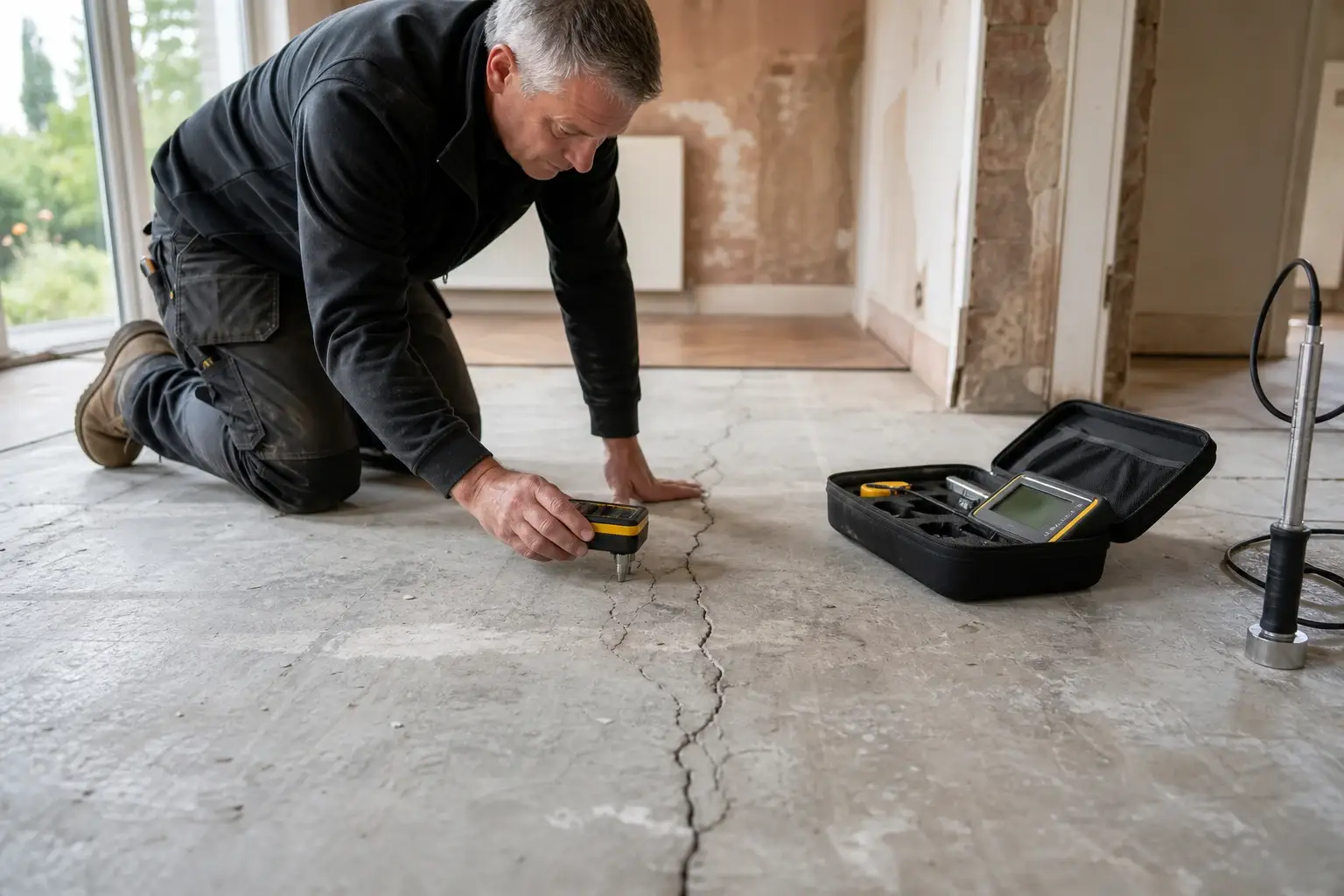
Not every crack in a subfloor is a problem. Some are cosmetic and stable. Others can point to movement, shrinkage, moisture-related issues or a substrate that is no longer performing as intended. The difficult part is that the crack itself does not always tell the full story.
What matters is where the crack is, how wide it is, whether it is changing, and what flooring is sitting above it or expected to go above it. A narrow hairline crack in a sound screed may be little more than a visible mark. A wider, stepped or moving crack, however, may affect flatness, cause local weakness, or influence how a finished floor performs.
If you are dealing with visible subfloor cracks, the safest approach is to look at the crack in context rather than assuming the worst or dismissing it too quickly.
When a subfloor crack may be little more than cosmetic
Some cracks are simply the result of normal drying, minor shrinkage or surface movement. These can appear as hairlines in concrete or screed and may not significantly affect the floor above, provided the substrate remains stable and within acceptable limits for the intended finish.
A crack may be less concerning if it:
- is very fine and stable
- does not show height difference from one side to the other
- does not widen over time
- is isolated rather than part of a wider pattern
- is not associated with hollow sound, crumbling edges or ongoing dampness
Even then, the crack should still be considered alongside the flooring type. A finish such as tile, engineered wood, LVT or carpet can react differently to the same substrate condition. What is tolerable for one floor may be less suitable for another.
When cracks may affect flooring performance
Some cracks matter because they can affect the way the subfloor behaves under the finished flooring. That does not automatically mean failure, but it does mean the crack may deserve proper assessment before flooring is installed, or before repairs are carried out on an existing floor.
Cracks can be significant where they are associated with:
- movement – the crack opens and closes, or the floor feels unstable locally
- height difference – one side is higher than the other, which may affect flatness
- ongoing widening – suggesting the substrate is still moving
- moisture issues – dampness can contribute to breakdown, debonding or flooring distortion
- insufficient preparation – for example where the surface was not properly repaired before installation
- compatibility concerns – some floor finishes are more sensitive to substrate defects than others
For example, a crack in a screed may create a local weak point where a rigid finish could later crack, de-bond or show telegraphing through the surface. In other cases, the crack may not be the root cause at all, but rather a symptom of shrinkage, substrate movement or moisture imbalance.
Common crack patterns and what they may suggest
The pattern of cracking often gives useful clues, although it rarely gives a full answer on its own.
Hairline surface cracks
These are often the least concerning, especially if they are fine, dry and unchanged. They may be related to drying shrinkage or surface curing. Even so, they should still be checked if the finished floor is sensitive to substrate condition.
Random or branching cracks
These can sometimes indicate local stress, drying issues or surface weakness. If they are accompanied by dusting, soft patches or poor adhesion, the substrate may need closer investigation.
Cracks that follow joints or changes in the structure
These may reflect underlying movement, construction joints or transitions between different materials. They are not automatically serious, but they can be more relevant where flooring is bridging across them.
Cracks with vertical displacement
If one side sits higher than the other, the crack may be more likely to affect flatness, soundness and the long-term performance of the floor covering.
Why guessing about the cause can be misleading
A visible crack is only one part of the evidence. The same appearance can arise from quite different causes, including shrinkage, settlement, thermal movement, drying conditions, substrate preparation issues or moisture-related distress. That is why it is risky to decide from a photograph alone what the crack means.
This is especially important in disputes. A homeowner, contractor, retailer or manufacturer may all see the same defect differently unless the substrate is examined properly. An independent flooring inspection can help establish whether the crack is likely to be cosmetic, whether it is affecting the floor’s performance, and whether further testing or remedial work may be appropriate.
Where flooring has already been installed, the inspection may also consider whether the finished floor is bridging a crack safely, whether movement is transferring through the finish, and whether the defect is consistent with installation or substrate-related issues. For more on that distinction, see how to tell whether a flooring problem needs an independent inspection or just a complaint.
What an impartial inspection can assess
An independent inspection is not about jumping to blame. It is about identifying what is happening and whether it matters for the flooring in question.
Depending on the situation, an inspection may look at:
- crack width, pattern and location
- whether there is evidence of movement or displacement
- surface strength and soundness
- flatness and local undulation
- moisture conditions where relevant
- the floor type, installation method and sensitivity to substrate defects
- any visible signs of prior repair or preparation failure
Where a subfloor problem may be linked to moisture or condensation, the wider conditions can matter as much as the crack itself. Cold weather, poor ventilation and damp substrates can all influence flooring performance, so it may also help to read why condensation can affect flooring performance in colder weather and why moisture readings are important before installing new flooring.
When to get the crack checked
It is sensible to arrange an inspection if the crack is widening, if the floor feels uneven or unstable, if the finished floor is showing signs of movement, or if you are about to install a new floor over a cracked substrate. The earlier the issue is assessed, the easier it is to understand whether the crack can be monitored, repaired or needs more detailed investigation.
The Flooring Inspector provides independent subfloor and flooring inspections across England, Scotland and Wales, with impartial reporting for homeowners, contractors, insurers and other professionals. If you are dealing with unresolved subfloor cracks and need a clearer view of their significance, you can request a call back before a quotation for inspection is prepared.
For related services, see our subfloor inspection page and services overview.