
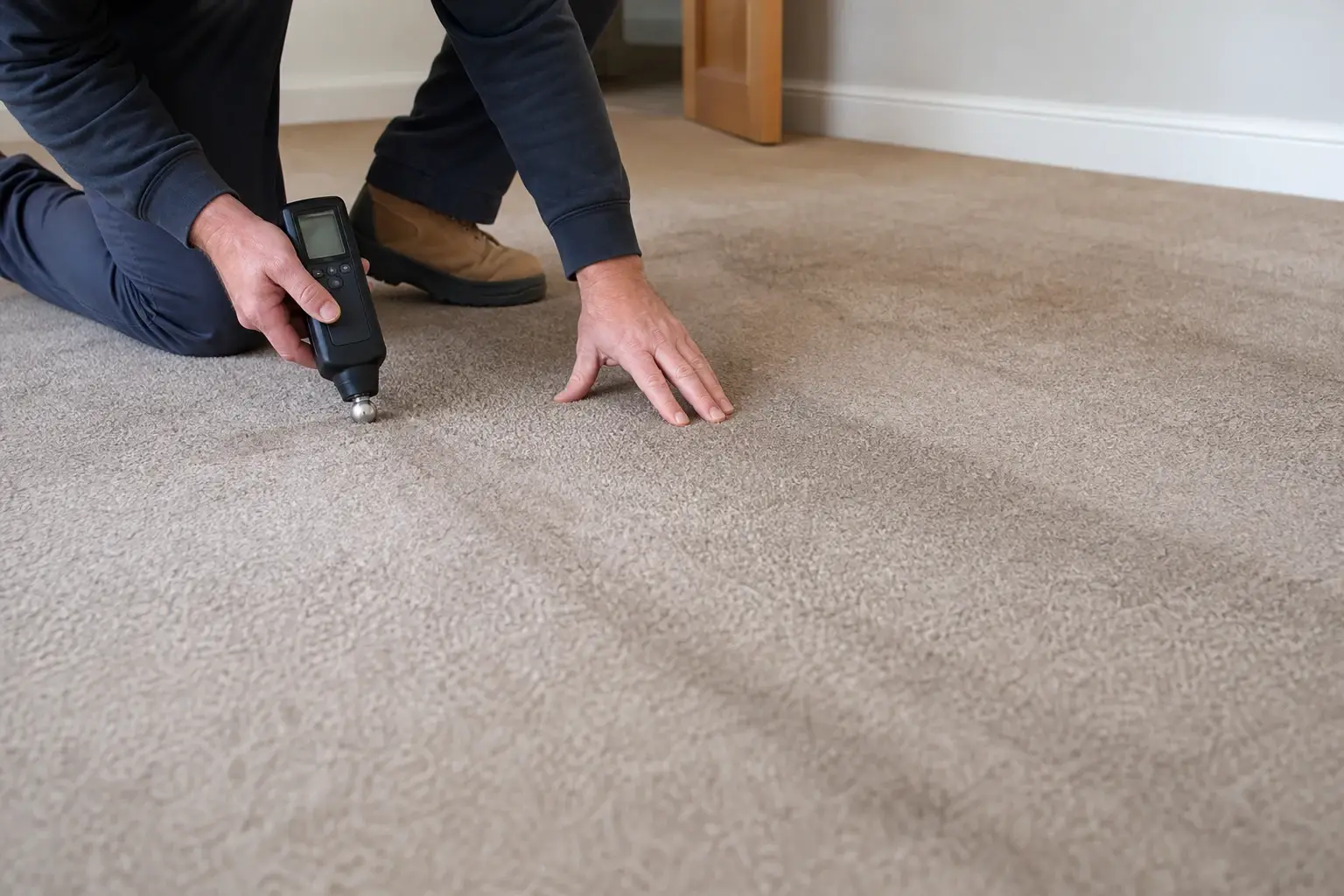
A carpet that starts to look flat, patchy, shaded or uneven does not automatically mean it has been badly fitted or that the product has failed. Visual changes can develop for several reasons, and similar-looking symptoms may have very different causes.
That is why carpet appearance problems need a careful, evidence-led approach. In some cases the issue is mainly cosmetic. In others, the visible change can point to installation faults, movement in the floor below, product characteristics or conditions in the room that are affecting performance.
Understanding the difference matters, especially if the carpet is relatively new or the change has become more noticeable over a short period.
What poor carpet appearance can look like
People usually notice a carpet has changed because it no longer looks uniform. Common visible signs include:
- flattened or matted areas
- shading or areas that look lighter or darker depending on direction and light
- ripples, wrinkles or loose-looking sections
- pile distortion, where the fibres appear pushed, crushed or leaning in one direction
- visible traffic lanes or worn paths
- seams that stand out more than expected
- patches that look uneven in texture or height
These signs can overlap. For example, a carpet may appear worn in one area when the underlying issue is actually repeated crushing from traffic, insufficient pile resilience, or a problem with how it was installed and tensioned.
Why the same symptom can have different causes
A visual problem on its own rarely tells the full story. A carpet can look loose, rippled or distorted for a number of reasons, including the following.
Normal use and traffic
Some flattening is to be expected in busy areas, particularly where people regularly walk the same route. Entrances, hallways, stairs and the edges of rooms often show changes first. This is not always a defect; it may simply reflect how the carpet is being used.
Installation quality
Carpets need to be fitted correctly for the product and the room. If tensioning, seaming, gripper placement or trimming is not right, the carpet may not sit or perform as intended. In some cases, a carpet can look acceptable at first and then begin to show rippling, loose areas or visible distortion later. For more on that, see why new carpet can look loose or uneven, and what the visible signs may mean and why carpets ripple or wrinkle after installation, and what it may indicate.
Subfloor conditions
The floor beneath the carpet matters. If the substrate is uneven, contaminated, soft in places or not properly prepared, the carpet may not lie as intended. A problem in the subfloor can create a visible issue in the finished carpet even when the carpet itself is not the root cause. If you suspect the floor below may be contributing, an inspection of the subfloor can help establish whether it is part of the problem.
Product characteristics
Some carpets show shading or texture change more readily than others. That can be influenced by pile type, yarn construction, colour, pile direction and the way light falls across the room. What looks like uneven wear can sometimes be a normal characteristic of the carpet rather than a defect. Equally, a characteristic that is visible in one setting may be much more noticeable in another.
Environmental and occupancy conditions
Heavy furniture, poor airflow, repeated local loading and day-to-day living patterns can all affect appearance. In some homes, changes may be more noticeable in rooms with large windows, strong natural light or variable temperature and humidity. None of these factors should be assumed to be the sole cause without proper investigation.
Why appearance alone can be misleading
It is easy to assume that a carpet which looks poor has simply worn out. Sometimes that is true. But similar symptoms can also be seen where the carpet is being affected by movement, poor installation or the conditions below it.
For example, a flat-looking area may be the result of pile crushing. A shiny patch may be due to shading, pressure, or wear. A wrinkled section may relate to installation or floor movement. Because these signs can overlap, a visual check alone may not be enough to determine what has happened.
If the carpet problem is developing in several places, or if it has appeared soon after installation, an independent inspection can help separate normal appearance changes from something more significant.
What an independent carpet inspection can help establish
An impartial inspection looks at the carpet as a system rather than just the visible symptom. Depending on the situation, that may include the carpet construction, the fitting method, seams, edges, subfloor condition and any signs of movement or moisture-related issues.
The aim is not to jump to blame. It is to identify the most likely cause, or causes, based on evidence. That can be particularly useful where a complaint has not resolved the issue, or where different parties have different views about what has happened.
The Flooring Inspector provides independent carpet inspections across England, Scotland and Wales, including formal written reports where needed. You can read more about carpet inspection services and how to tell whether a flooring problem needs an independent inspection or just a complaint.
When it is worth asking for help
An independent inspection may be worth considering if:
- the carpet looked acceptable at first, but the appearance has changed
- the issue is getting worse rather than stabilising
- there are ripples, loose-looking areas or visible distortion
- you suspect the floor below may be affecting performance
- a retailer, installer or other party has given a different explanation and the issue remains unresolved
If you are trying to understand what is normal and what may indicate a defect, the most useful next step is usually a proper assessment of the carpet and the floor beneath it. If you would like to discuss an unresolved problem, you can request a call back and a member of the team can review the issue before a quotation is prepared.