
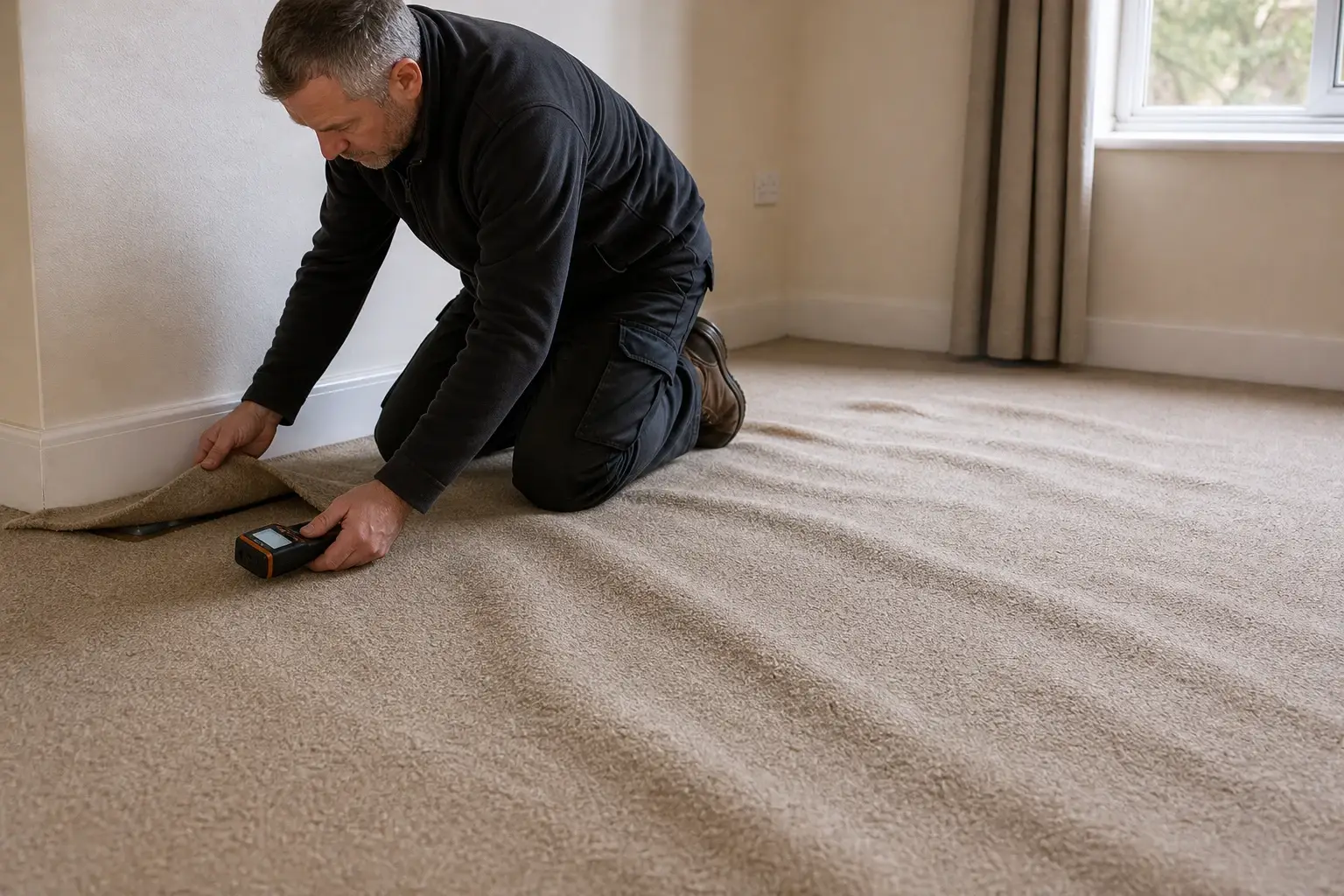
Recurring carpet ripples do not always mean the same thing, and they do not automatically prove the carpet was badly fitted. But if the rippling keeps returning after it has been flattened, it is worth looking closely at the pattern, timing and surrounding conditions. Those details can help point towards fitting issues, insufficient stretching, gripper problems, movement in the floor below or environmental changes.
In practice, carpet ripples after installation are often a symptom rather than the whole story. The visible signs may be enough to narrow down the likely causes, but an independent inspection is often needed before anyone can say which factor is responsible.
What the ripples look like can matter
Not all ripples behave in the same way. Some appear as long waves running across the room, while others are smaller wrinkles near doorways, seams or edges. Some are obvious straight after fitting, while others become more noticeable after a period of use.
It is helpful to note:
- whether the ripples are in one area or spread across the room
- whether they change with walking, vacuuming or temperature
- whether they appear near walls, seams, joins or fitted furniture
- whether the carpet feels loose, bouncy or uneven underfoot
- whether the problem returns after being re-stretched
These observations do not confirm the cause on their own, but they can guide the inspection.
Signs that may point to a fitting or stretching issue
One common possibility is that the carpet has not been tensioned as well as it should have been for the room and product. If the pile looks smooth at first but then starts rippling again, that may suggest the carpet is moving because it was not properly stretched, or because the fit is being affected by another factor.
Clues that can be relevant include visible fullness at the edges, ripples that return after a brief improvement, or a carpet that looks tidy in one light but clearly buckled in another. A poor fit is not the only explanation, but it is one of the first things to check when ripples keep reappearing.
Gripper, underlay and edge detail can also play a part
Problems at the perimeter of the room can allow the carpet to move. If gripper is not secure, is damaged, or has not been installed consistently, the carpet may fail to stay under proper tension. Likewise, if the underlay is unsuitable, uneven or compressing in certain areas, the carpet can begin to look loose or wrinkled.
Edge details can be important around doorways, thresholds and fitted items. Ripples close to these areas may suggest the carpet is not being held evenly. That does not automatically mean the gripper is at fault, but it is a useful place to investigate.
For related warning signs around edge behaviour, it may also help to read Why carpets ripple or wrinkle after installation, and what it may indicate.
Subfloor and environmental conditions should not be ignored
Sometimes the carpet is not the only part of the installation worth considering. A subfloor that is uneven, locally soft, or affected by movement can contribute to visual rippling above. If the floor underneath changes shape or support, the carpet may reflect that movement.
Environmental conditions can also influence appearance. Changes in humidity, temperature or ventilation may affect the way carpet and underlay behave, especially if the room conditions are very different from those expected during installation. In some cases the ripples may be more noticeable at certain times of year or after heating patterns change.
If there is a suspicion that the underlying floor is contributing to the problem, an inspection of the substrate may be worthwhile. The issue may still be a carpet defect or installation matter, but it is important not to rule out the floor beneath too early.
When recurring ripples suggest more than normal settling
Some carpets need a short bedding-in period, but ripples that keep coming back after attempts to correct them deserve closer attention. The following signs can indicate the problem is not simply cosmetic:
- the ripples reappear soon after being re-stretched or flattened
- the carpet is lifting or moving at the edges
- there are soft spots or uneven areas underneath
- seams are opening or looking stressed at the same time
- the problem has developed quickly after installation
When these signs appear together, an independent assessment can help separate appearance from underlying defect.
Why an impartial inspection can help
With disputed carpet problems, there is often more than one possible explanation. A visual issue may relate to fitting, but it may also reflect the subfloor, the underlay, the installation conditions or the way the carpet is being used. An independent carpet inspection can help identify what was observed on site, what measurements or checks are relevant, and which factors are most likely to have contributed.
The Flooring Inspector carries out impartial carpet inspections across England, Scotland and Wales, including on-site inspections and formal written reports where required. If the problem remains unresolved, it can be sensible to request a call back so the issue can be discussed before a quotation for inspection is prepared.