
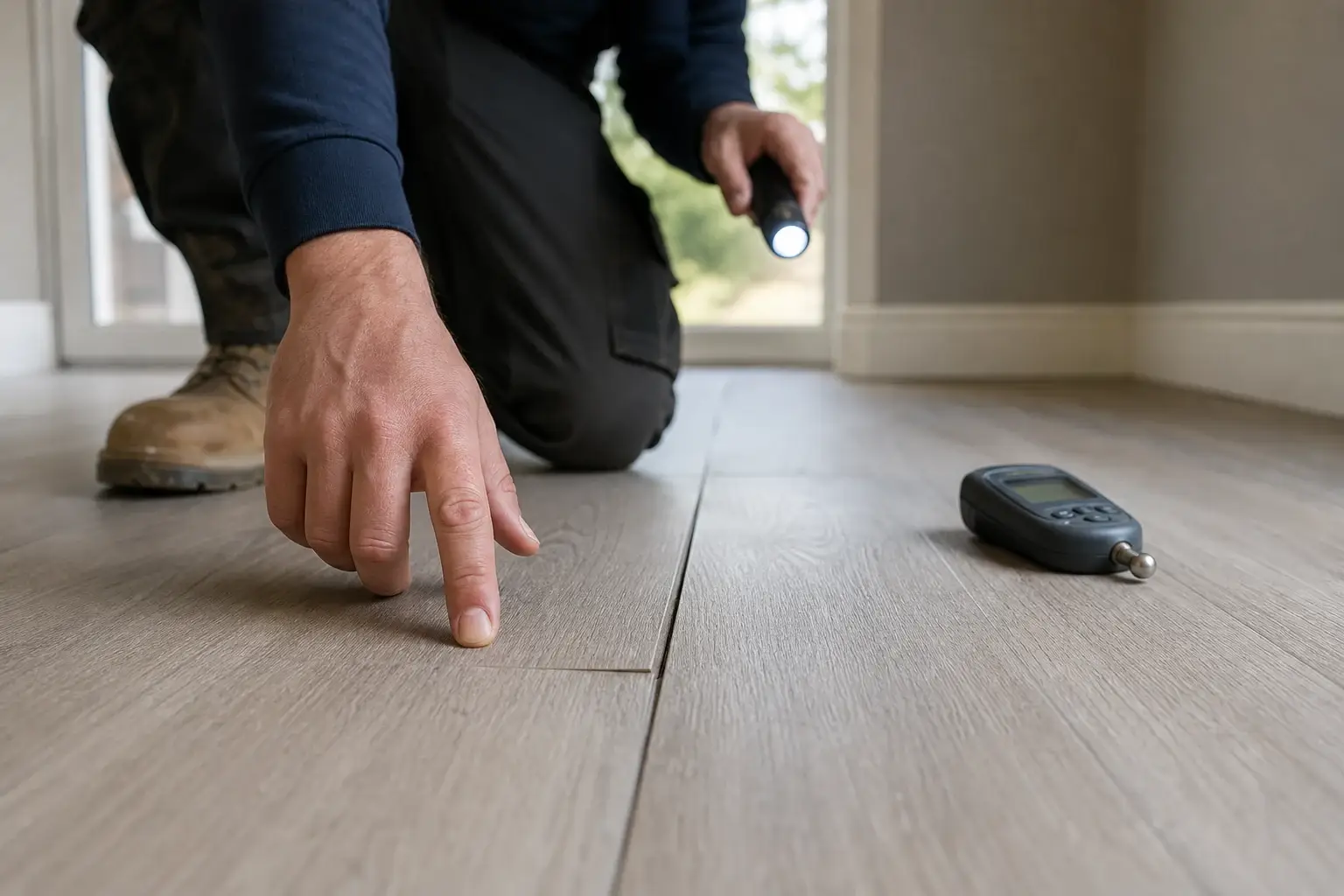
When click LVT separating at the joints becomes visible, it is usually a sign that the floor is no longer behaving as a stable, locked system. That does not automatically mean the product is defective. In many cases, joint opening is linked to movement, uneven support, insufficient expansion allowance, moisture-related changes or problems with the way the floor was installed.
The important point is that the visible gap is only the symptom. An independent inspection can help establish whether the issue is being driven by the click mechanism itself, the subfloor below, environmental conditions, or a combination of factors.
What joint separation in click LVT can look like
Click LVT joint separation is often first noticed as a narrow line opening between planks or tiles. In some cases the gap is only visible in certain light, or when the floor is walked on. In others, the separation is obvious enough to catch a finger or create a noticeable break in the surface pattern.
Other visible signs may include:
- joints that appear to open and close in different weather conditions
- slight lifting or unevenness along one edge of a plank
- movement underfoot near the separated area
- gaps appearing in more than one part of the room
- edges that no longer sit flush with the neighbouring plank
These signs can suggest that the floor is under stress, but they do not, on their own, show why that stress is present.
Possible causes of separating joints
There are several reasons click LVT joints can open. A proper inspection looks at the whole installation rather than focusing on the gap alone.
Movement in the subfloor
If the base beneath the floor is moving, flexing or not providing consistent support, the click system may start to work loose over time. This can happen where the subfloor is uneven, where there are dips or peaks, or where the flooring is bridging across a localised problem area.
Even a small amount of movement can affect how tightly click joints remain locked. In some situations the issue may be more noticeable at doorways, thresholds, room edges or high-traffic paths.
Subfloor flatness issues
Click LVT generally relies on a flat, well-prepared subfloor. If the floor below is outside the recommended tolerances for the product used, the planks may be forced to flex or sit under tension. Over time, that tension can contribute to joint separation, edge movement or click failures.
This is one reason subfloor checks matter before installation. Where flatness was not suitable, the floor may look acceptable at first but begin to show problems as soon as it is put into service.
Related reading: Installation tolerances that can make or break a floor finish
Moisture-related movement
Moisture can affect flooring performance in different ways depending on the product, subfloor and building conditions. If moisture levels in the subfloor are not suitable, or if the environment is unusually damp or variable, the flooring system may move in ways that affect the joints.
That movement may not always show up immediately. Sometimes the first sign is a gap that appears after a period of use, seasonal change or a change in internal conditions.
Related reading: Moisture testing before flooring goes down: the checks that matter
Expansion allowance that is too tight
Click LVT floors need room to move at the perimeter and around fixed points. If the expansion allowance is too small, or if the floor has been trapped by skirting, architraves, thresholds or fitted units, it may push against itself as conditions change. That pressure can transfer into the joints.
In some cases, the result is separation; in others, planks may compress, lift or start to sound hollow or unstable in isolated areas. The visible symptom can vary, but the underlying issue may still be restraint in the system.
Installation quality concerns
Joint separation can also point to issues during fitting, such as poor engagement of the locking profile, inadequate preparation, mixed product batches, or installation in unsuitable conditions. None of these can be confirmed by appearance alone. A floor may look neatly laid at first and still fail later if the installation conditions were not appropriate.
If the floor has been disputed, it is especially important not to jump straight to blame. The same visible gap can arise from different causes, and the evidence matters.
What an inspection may look at
An independent flooring inspection normally focuses on the symptoms, the installation details and the site conditions. Depending on the case, that may include checking the pattern of separation, the floor’s movement underfoot, the condition of the click joints, the flatness of the subfloor, signs of restraint at the perimeter and any evidence of moisture or substrate issues.
If the matter is part of a complaint or dispute, it can also help to gather early photographs, installation paperwork, product details and any information about when the problem first appeared. That evidence can be useful when assessing whether the issue is localised or part of a wider failure pattern.
Related reading: What evidence to gather before asking for an independent flooring inspection
When to consider an independent flooring inspection
If the joints are widening, the floor is moving, or the problem keeps returning after repair attempts, an independent inspection may help clarify the underlying cause. This is particularly useful where the issue is disputed between homeowner, installer, retailer or other parties.
For unresolved cases, The Flooring Inspector provides independent, evidence-based assessments across England, Scotland and Wales, including on-site inspections and formal written reports where appropriate.
If you are dealing with click LVT separating at the joints and the cause is not clear, it is usually better to establish the facts before making assumptions about what has gone wrong.