
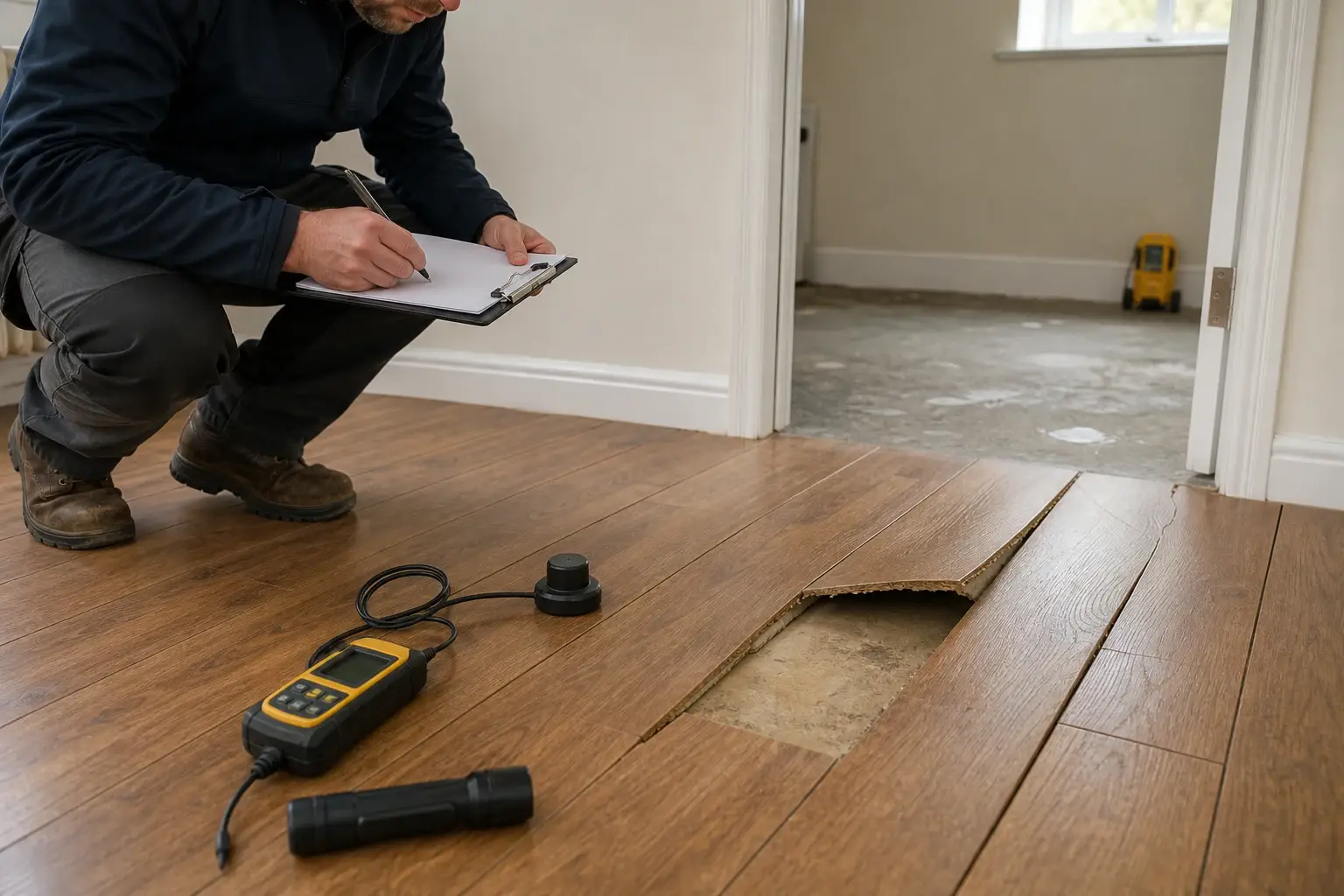
Not every flooring problem needs an independent flooring inspection. In some cases, a straightforward complaint to the installer, retailer, landlord or contractor is the right first step. But when the symptoms are unclear, the problem is getting worse, or each side is reaching a different conclusion, a complaint alone may not be enough.
The key difference is this: a complaint tells the other party something is wrong. An independent inspection helps work out what is wrong, why it may be happening, and what evidence supports that view. That distinction matters when the issue involves moisture, subfloor preparation, product behaviour, installation quality or movement in the floor below.
When a complaint may be enough
A simple complaint can be appropriate when the issue is obvious, limited, and closely tied to a specific service failure. For example, if a carpet was visibly damaged on installation, a floor was left unfinished, or a clear fitting error has been acknowledged, the matter may be resolved through normal aftercare or a warranty process.
It can also be sensible to complain first where the problem is minor and does not yet raise technical questions. A single loose edge, a mark, or a snag may not require a formal report if the cause is clear from the circumstances and can be addressed quickly.
In those situations, it is usually worth keeping the communication factual and concise. Photograph the issue, note when it appeared, and give the business a chance to respond.
Signs that a complaint alone may not be enough
Some flooring problems look simple on the surface but have more than one possible cause. That is where an independent inspection becomes more useful. If the visible symptom does not clearly explain the underlying problem, assumptions can lead a dispute in the wrong direction.
You may need an impartial inspection if:
- the floor is lifting, cupping, buckling, rippling, hollow, or moving underfoot
- the problem affects a larger area rather than one isolated spot
- the issue appeared after installation, but the cause is not obvious
- there are signs of moisture, staining, odour, swelling or softening
- the subfloor may be uneven, contaminated, damp or otherwise unsuitable
- there is disagreement about whether the installation met the required standard
- different parties are blaming different causes, such as the product, the adhesive, the substrate or the environment
These are the kinds of cases where visible damage is only part of the picture. A floor can fail because of a single issue or a combination of factors. For example, moisture, poor preparation and an unsuitable adhesive can all produce similar symptoms. That is why the question is often not just “what does it look like?” but “what is causing it?”
Why technical investigation matters in flooring disputes
Flooring disputes often stall because each party is looking at the problem from a different angle. A homeowner may see a defect. An installer may see movement caused by the building. A retailer may point to environmental conditions. A manufacturer may want to know whether the substrate was suitable. None of those positions should be accepted without evidence.
An independent inspection can help establish factual points such as:
- the nature and extent of the defect
- whether the symptoms are consistent with installation-related issues, substrate issues or environmental movement
- whether moisture testing is relevant
- whether subfloor flatness, preparation or contamination may have contributed
- whether the symptoms suggest a one-off local issue or a wider pattern
That evidence can be valuable in a complaint, a warranty discussion, an insurance query or a formal dispute process. It does not guarantee an outcome, but it can replace guesswork with a clearer technical picture.
If you are trying to decide whether the issue is simply a complaint or something more, it may help to read How to tell whether a flooring problem needs an independent inspection or just a complaint alongside this guide. The practical question is not whether you are frustrated enough to complain. It is whether the problem needs evidence before anyone can sensibly respond.
What evidence to gather early
Before positions harden, it is sensible to preserve what you can. Early evidence can make a significant difference, especially if the floor is changing over time.
Useful information may include:
- clear photographs or short videos of the problem
- the date the floor was installed and when the issue was first noticed
- product details, if available
- any moisture readings, installation notes or handover paperwork
- copies of emails, messages and complaint responses
- a brief record of whether the room conditions changed, such as heating use or leaks
If the issue is part of a broader dispute, it is often worth gathering this information before the floor is altered, repaired or replaced. Once the evidence changes, it can become harder to identify the original cause.
For a more detailed list of what to keep, see What evidence to gather before asking for an independent flooring inspection.
When an independent flooring inspection is the better next step
If the floor is visibly failing, the cause is disputed, or the issue could affect liability, an impartial inspection is often the more useful next step than repeated complaint exchanges. That is particularly true where the floor is expensive, the installation is recent, or the problem may involve hidden conditions beneath the surface.
The Flooring Inspector carries out independent, evidence-based flooring inspections across England, Scotland and Wales. The aim is to identify the likely cause of the problem and provide clear findings that can help support a practical resolution.
If you are unsure which route to take, you can request a call back and discuss the issue before a quotation for inspection is prepared. In many disputes, that first conversation is the simplest way to work out whether the matter is best handled as a complaint, a technical investigation, or both.