
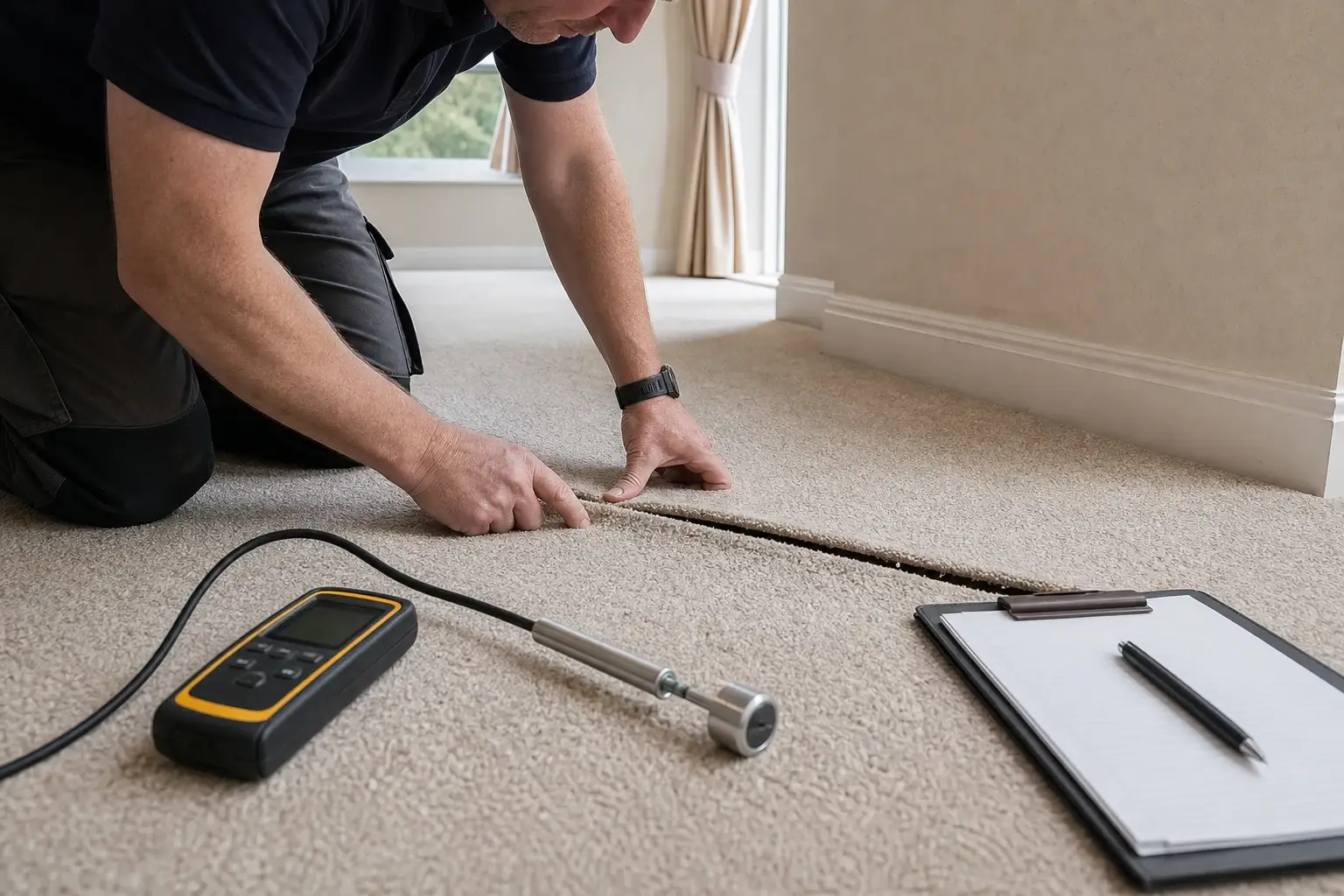
When carpet seams opening up become visible, the first thought is often that the seam itself has failed. Sometimes that is part of the story, but not always. A seam can open because of the way the carpet was fitted, because the carpet or backing has reacted to the environment, or because something below the carpet is moving or changing shape.
That is why the visible symptoms matter, but only up to a point. Fraying, gapping, ridge lines, a split that keeps returning, or a seam that looks fine in one area and worse in another can all suggest different causes. An impartial inspection can help identify what is actually going on rather than relying on guesswork.
Why carpet seams may open up
A carpet seam is where two lengths of carpet are joined together. If that joint is not made, supported or maintained properly, it may begin to separate over time. But seam opening is not always caused by the seam tape alone.
Common possibilities include:
- Poor seam preparation or fitting – if the carpet was not aligned, bonded or trimmed correctly, the seam may be more vulnerable to opening.
- Movement in the carpet – some carpets can stretch, relax or shift slightly after installation, which may place strain on the join.
- Changes in temperature or humidity – environmental changes can affect the carpet backing, adhesive performance or the way the carpet sits in the room.
- Movement in the floor below – if the subfloor flexes, settles or has an uneven area, the seam above may be affected.
- Heavy traffic or dragging loads – repeated stress in the same area can make an existing weakness more noticeable.
None of these should be assumed from appearance alone. A seam may look as though it has “come apart”, when the underlying issue is actually tension, movement or poor preparation elsewhere in the floor build-up.
What the visible signs may suggest
Different symptoms can point towards different problems, although they are not proof on their own.
Fraying at the seam
If the carpet edges are fraying, the join may have been exposed to stress, or the cut edges may not have been sealed or protected as well as they should have been. Fraying can also occur where a seam has been under tension for some time.
A visible gap between carpet edges
A clear gap can suggest the carpet has moved, shrunk, been stretched unevenly or was not fitted tightly enough at the outset. In some cases, it can also indicate that the carpet is reacting to the room conditions or movement in the substrate below.
A raised line or ridge
Sometimes the seam does not fully open, but becomes visible as a ridge. That can happen where the join is pressing upwards, where the carpet pile sits differently on either side, or where the seam tape and adhesive have created a noticeable line. A ridge is not always a failure, but it may still indicate a fitting or support issue.
A seam that keeps reopening after repair
If a seam has been repaired and the problem returns, there may be an unresolved underlying cause. That could be a localised fitting issue, but it could also involve movement, inadequate adhesion, or an issue with the floor beneath the carpet. Repeated failure is often a sign that the visible defect is only one part of the problem.
What homeowners can check without jumping to conclusions
If you have a seam problem, it is reasonable to observe a few things before raising a complaint or requesting inspection:
- Where the seam is located and whether the issue is localised or widespread
- Whether the opening appeared quickly or gradually
- Whether the room has had recent changes in heating, humidity or use
- Whether the floor feels springy, uneven or noisy underfoot
- Whether there are signs of fraying, buckling, rippling or visible adhesive failure
It can also help to keep clear photographs taken in good light. If the issue is part of a wider flooring dispute, it is sensible to gather relevant evidence before the problem is altered by temporary repairs or repeat attempts to fix it. What evidence to gather before asking for an independent flooring inspection explains this in more detail.
When the problem may be installation-related, material-related or subfloor-related
Open seams can have more than one cause. In practice, an inspection may look at:
- Installation-related factors such as seam placement, cutting, bonding, tension and finishing
- Material-related factors such as how the carpet backing, construction or pile behaves in service
- Subfloor-related factors such as flex, unevenness, moisture or movement below the carpet
That distinction matters, because the visible defect alone does not tell you who or what is responsible. Two seams can look similar but fail for completely different reasons.
If you are unsure whether to make a normal complaint or request technical investigation first, this guide may help: How to tell whether a flooring problem needs an independent inspection or just a complaint.
When an independent carpet inspection can help
If a seam has opened up and the reason is not obvious, an independent inspection can help establish whether the issue is consistent with installation defects, movement in the floor below, environmental effects or another cause. That is particularly useful where the same area has been repaired more than once, the problem is disputed, or several parties are involved.
The Flooring Inspector provides impartial carpet inspections, along with written reports where appropriate, to help identify the likely cause of carpet defects and related flooring issues. Because the work is independent from manufacturers, suppliers and installers, the focus stays on evidence rather than assumptions.
If the problem is unresolved, you can request a call back through the website and a member of the team can discuss the issue before a quotation for inspection is prepared.
For more on the service itself, see Carpet Inspector or Contact.